Even mayo has sugar in it? Reading your food labels
I tried to buy mayonnaise today because my parents’ early-70s hippie split pea recipe calls for it. And you know what? Every mayonnaise at Whole Foods contained either honey or sugar.
WTF? Or should I say, WTF WF?
So, I bought a dozen eggs instead and decided to try making my own. (A dozen may have been an overshot – turns out you only need two.)
I looked up a couple recipes and picked the one from Rodale because they generally stand for good stuff, participate in things I like, and sponsor research on organic vs. conventional foods.
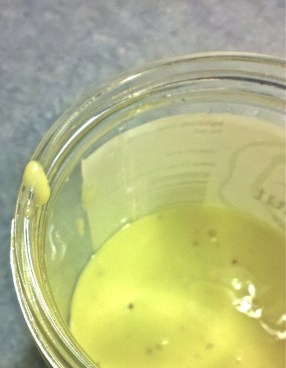
My mayo, naturally yellow from the egg yolk
Mayo isn’t the only food where sugar is insidiously added. When you try to cut out sugars, you’ll start reading labels only to find that every packaged thing you loved has sugar somewhere in the list.
Barbecue sauce? Of course. Tomato sauce? Often. Yogurts? Everything but plain (and even then, double check – in China I was saddened to find that my “plain flavor” yogurt really should have been called “sugar flavor”).
Where else would you never expect sugars? Most breads contain sugar, agave, or honey (sadly, this includes that tasty multi-grain at Trader Joe’s, most gluten-free brands, pizza dough, and some baguettes). Have heart: there are many other breads that are sugar-free and tastier for it.
Some of you might see it as an excuse not to try the 21 Days of No Sugars. I see it as an opportunity to stop letting other people cook for you! They’re in the business of making money, and so they’re in the business of sourcing ingredients that increase their profit margin. Sugar as filler? Sure. Less olive, more canola? Why not. That’s what’s going on in many of your packaged foods.
It’s also an opportunity to get to know your foods better. By reading labels, you’ll start to see what types of ingredients get paired together; that makes it easier to cook on the fly – when you have a fridge full of foods and you want to figure out what you might make from those.
So, how did the mayo go? Decent. The recipe is posted below.
How did the split pea spread go? Wonderful. I’ll post that recipe soon.
Here’s the homemade mayo recipe I modified from the Rodale mayo recipe. I haven’t perfected it yet, but I’ll give you what I did so far:
Mix ¼-1/2 teaspoon mustard powder, 1/8-1/2 tsp salt, 1 T vinegar or lemon, a pinch of cayenne, a pinch of black pepper, and two egg yolks. Room temp eggs are better than cold eggs. The mustard and the salt are important for increasing viscosity and stickiness. (Oils and eggs don’t want to mix, but you can make them!)
Use a whip to beat the mixture a bit.
Add in up to ¼ C. oil – olive, grapeseed, and safflower should all work. Continue whipping the mixture.
Keep adding little splashes of oil and whipping until it achieves a consistency you like. Too much and it’ll get runny. Too little and it’ll taste too much like egg yolk.
Enjoy!