In Mongolia’s cold, even fermented horse milk tastes good
Do not be fooled. Mongolia may have an average of 280 days of sun a year, but that doesn’t mean you get 280 days of warmth. It is remarkable how beautiful the day can be here – I’m talking big blue Montana skies and golden-lit hills kind of beautiful – and yet still you freeze your ears off with a quick trip to milk the horses, go pee, or whatever else it is you’re doing outside of your yurt.
How do people in the countryside do it? We are only in October – a “mild autumn month,” you might say – and today, in the city, it is -1 Celsius. In the countryside it is always a few degrees colder. By January, it will be -40 Celsius (which is also, conveniently, -40 Fahrenheit – in other words, effing cold).
And how, my fragile little California temperament wondered, do they do it on starch, meat, and dairy alone? Just for our six day trip to Bulgan province, I stocked up on a kilo of oranges (at the most amazing supermarket in UB). Scott, my Canadian company at the time, asked dryly, “Trying to avoid scurvy?”
“Yes, so what?” I replied, maybe a little defensively. The thought had crossed my mind.
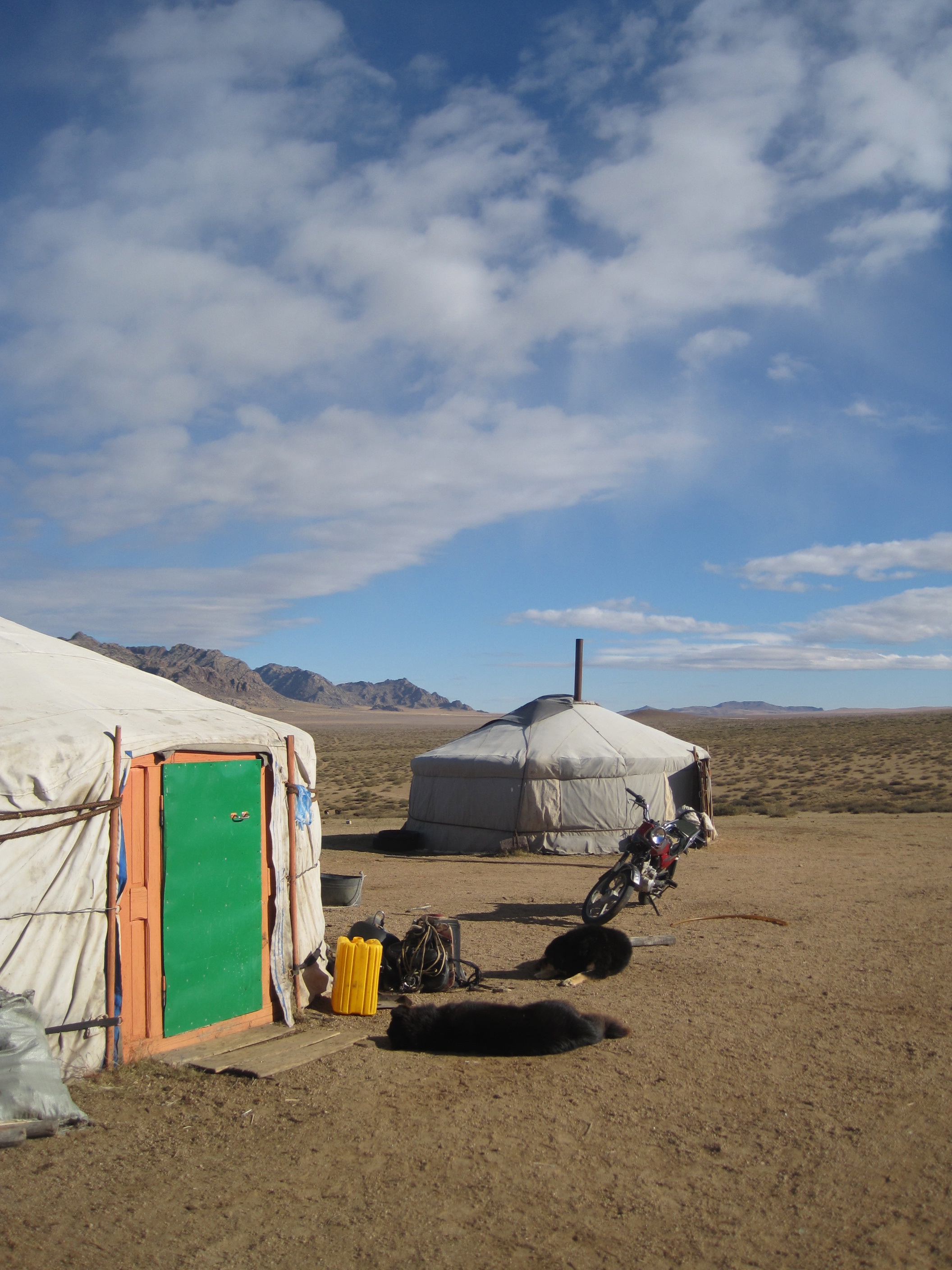
First it was beautiful sunny blue
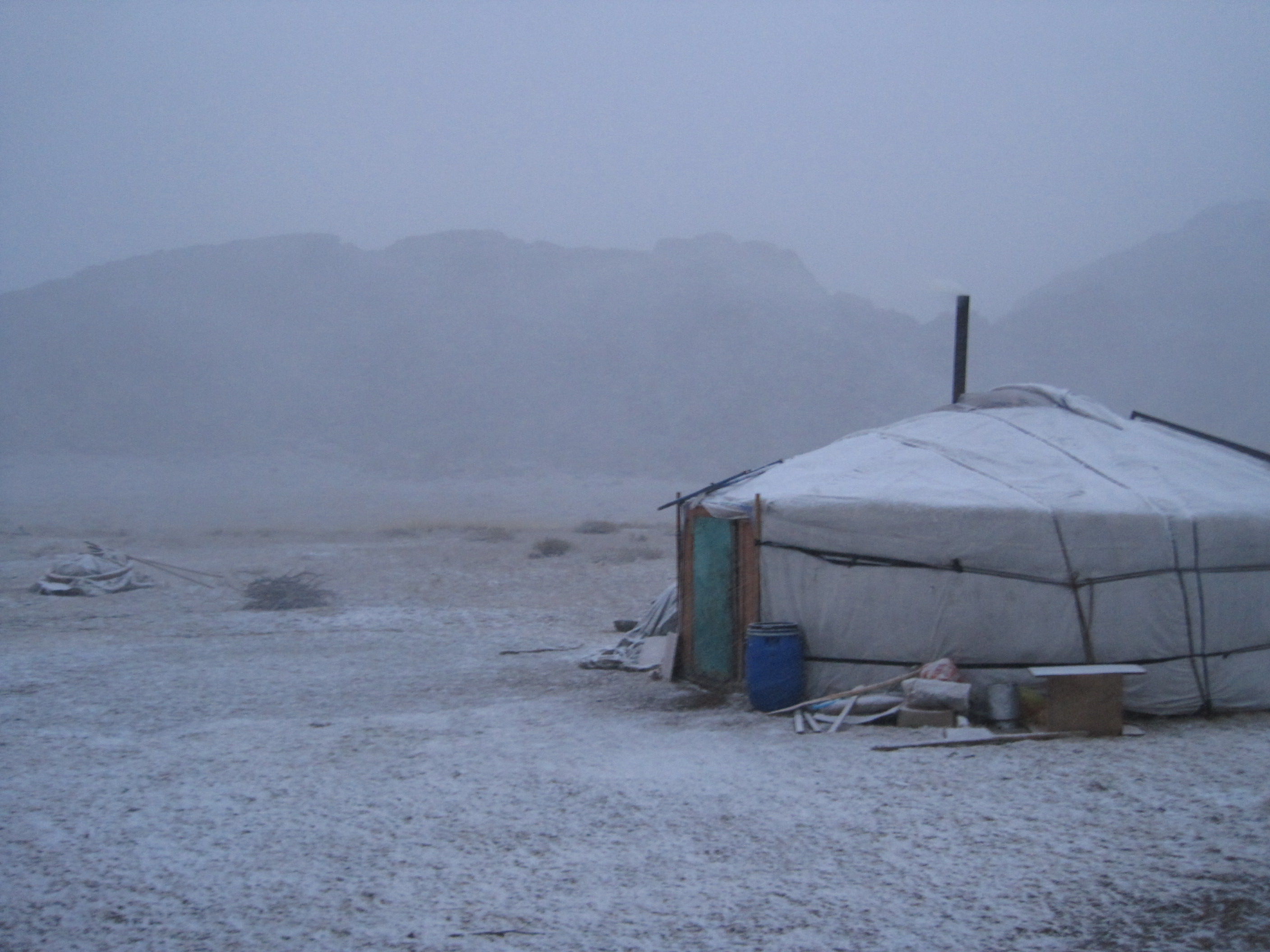
Then snow
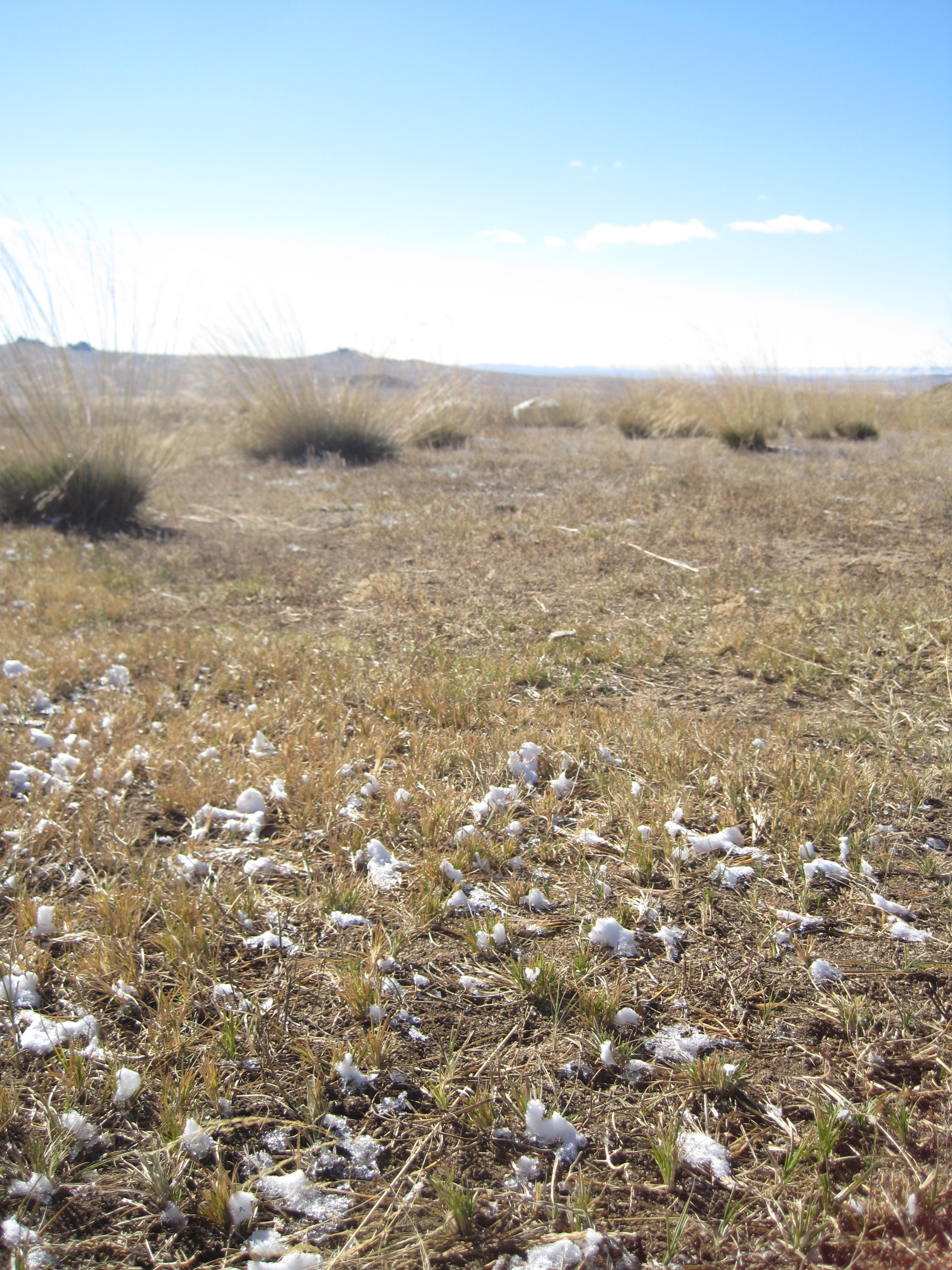
And the next morning, bright blue again (though notice the ice still frozen on the grass)
A bit of background: I went out to Bulgan province, about 20 kilometers past the roadside town of Sansar, with a foundation called Ger To Ger. My guidebooks tell me it is jointly funded by the Swiss government and a Mongolian NGO; the Ger To Ger office in the city told me that over 80% of what you pay goes directly to the community you are living in. Among the agency and foundation’s goals are to increase community-based tourism initiatives, preservation of land, and preservation of nomadic culture. Anyway, you can read more about it here: http://gertoger.org/
The nomads in the countryside are in the business of ranching, effectively. They spend their days herding their sheep, goats, cattle, and horses. Cow milk is an autumn staple and from it they make all sorts of dairy delicacies we don’t even have words for in English. The primary ones I ate were “urum” on bread and/or cookies, and milk tea.
Urum is what happens when you boil a big bowl of fresh raw cow milk over a stove until a skin forms across the top. You let it settle and then I think you heat it again. This forms a seal that I assume is sterile until you’re ready to eat or drink it. You scrape the top layer off and put it on a plate (it is cold enough that storing it on your shelf is fine), and you use the leftover milk for milk tea. The milk “skin,” for lack of a better word, is “urum.” Underneath the skin, all the fat of the milk has gathered, so you effectively have a thick cream you can spread onto your fried bread, your “boortsog” (fried cookies), or whatever other wheat product you have cooked.
The leftover milk is used in milk tea, which is more or less half-water and half-milk, a scant sprinkle of tea leaves, and a healthy dose of salt. It’s incredibly warming on a cold day on the steppe, and the salt feels like it is replenishing lost electrolytes. I’ve grown quite fond of milk tea.
But what of this scurvy problem? Mandarin oranges are not easily found on the open plain and are imported and quite expensive at the UB supermarket.
From what I’ve read, horse’s milk is the answer. It’s full of vitamins A, B, and C, plus some others and it’s rumored to have certain enzymes that arrest the process of bacterial formation, so it stays sterile, or at least fairly safe. It’s got a good amount of fat, and when you ferment it – which is actually the only way people seem to drink it – you get all warm and tipsy inside.
You’re wondering right now: fermented horse’s milk? Really?
You’re probably wondering if I tried it too. I did.
It tastes a lot like a really watery, slightly alcoholic kefir. It can actually get to about 10% alcohol content, so stronger than beer, but not quite vodka. Its name in Mongolian is “airag.”
I can’t say I would drink airag at my leisure, but I did drink a bit out there and liked it fine. I noticed that every person we stayed with made sure to drink at least a bowl a day, and many of the men drank several, sometimes interspersed with vodka straight.
One night, I was concerned we were the only ones eating – I said to the wife, “Husband eat?” (This is what happens when people speak just a little English – you start speaking bad English to them.)
“No,” she replied. “Husband, airag.”
It’s got some social importance too. If someone comes by your yurt, you get a pot of airag from the big vat it ferments in and you pour the person a bowl. He drinks it (or drinks some of it), passes it back to the man pouring, the guy refills it to the top, and sends it over to the next person.
Oh, and listen, you always only give and receive the bowl of airag with your right hand. Seriously. Remember that and I will have saved you a great offense next time you are in Mongolia (which you should be – it’s an awesome country).
After a bowl of airag, we felt fortified against the wind, we felt glowing in the sun, and we bounced along on our horses as if it were the most pleasant of experiences and not an intense workout of muscles and bones you never knew existed.
We figured if you visit each other enough during the winter, you remember you’re not alone in the frigid cold, and you stay warm by the fire and by the grace of the airag.
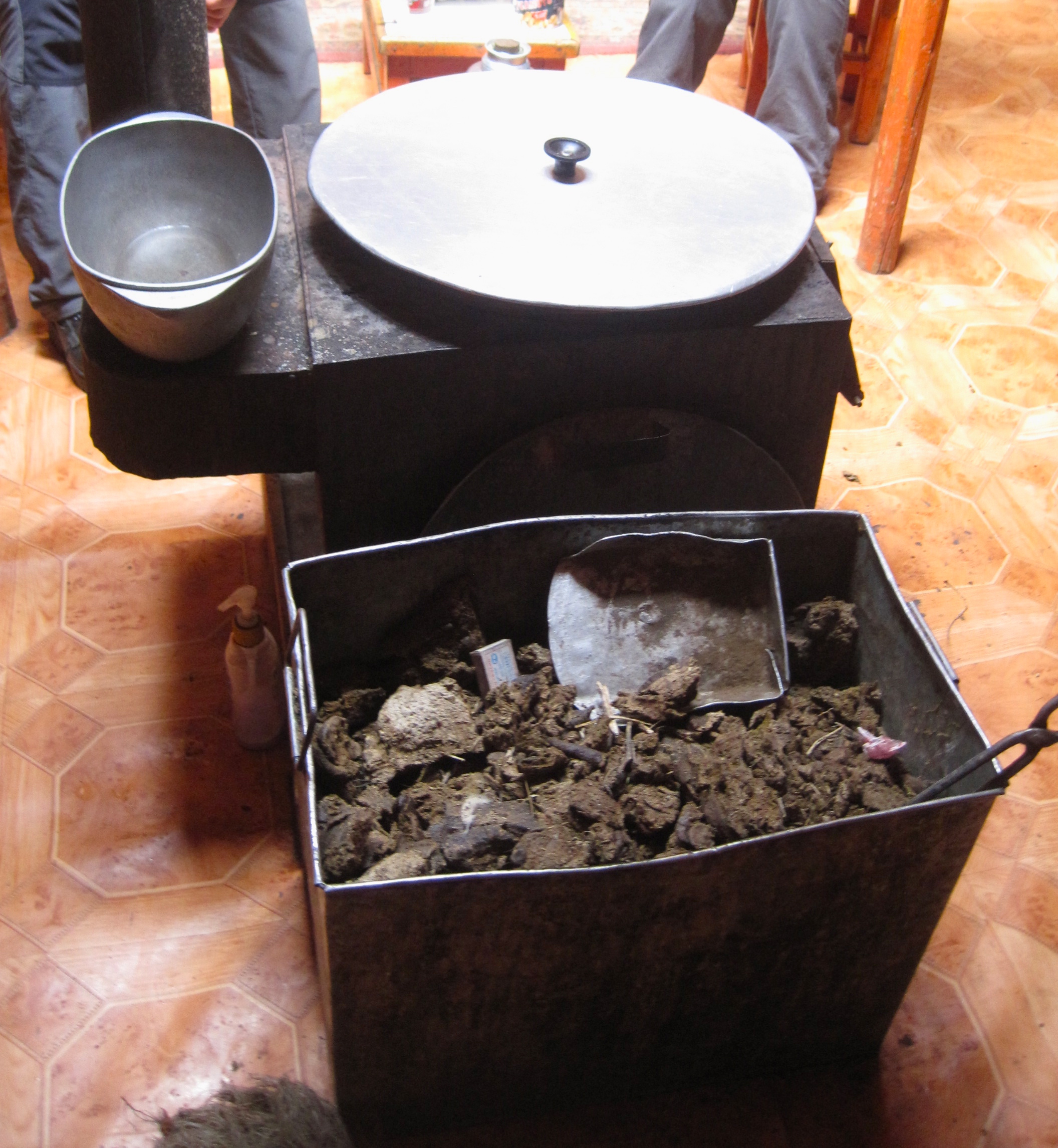
Everything gets cooked on this stove in big bowls that dip into the fire (one is covered here now). The stove also is the yurt’s central heating. It is most commonly powered by dried animal dung, like that in the box next to it.
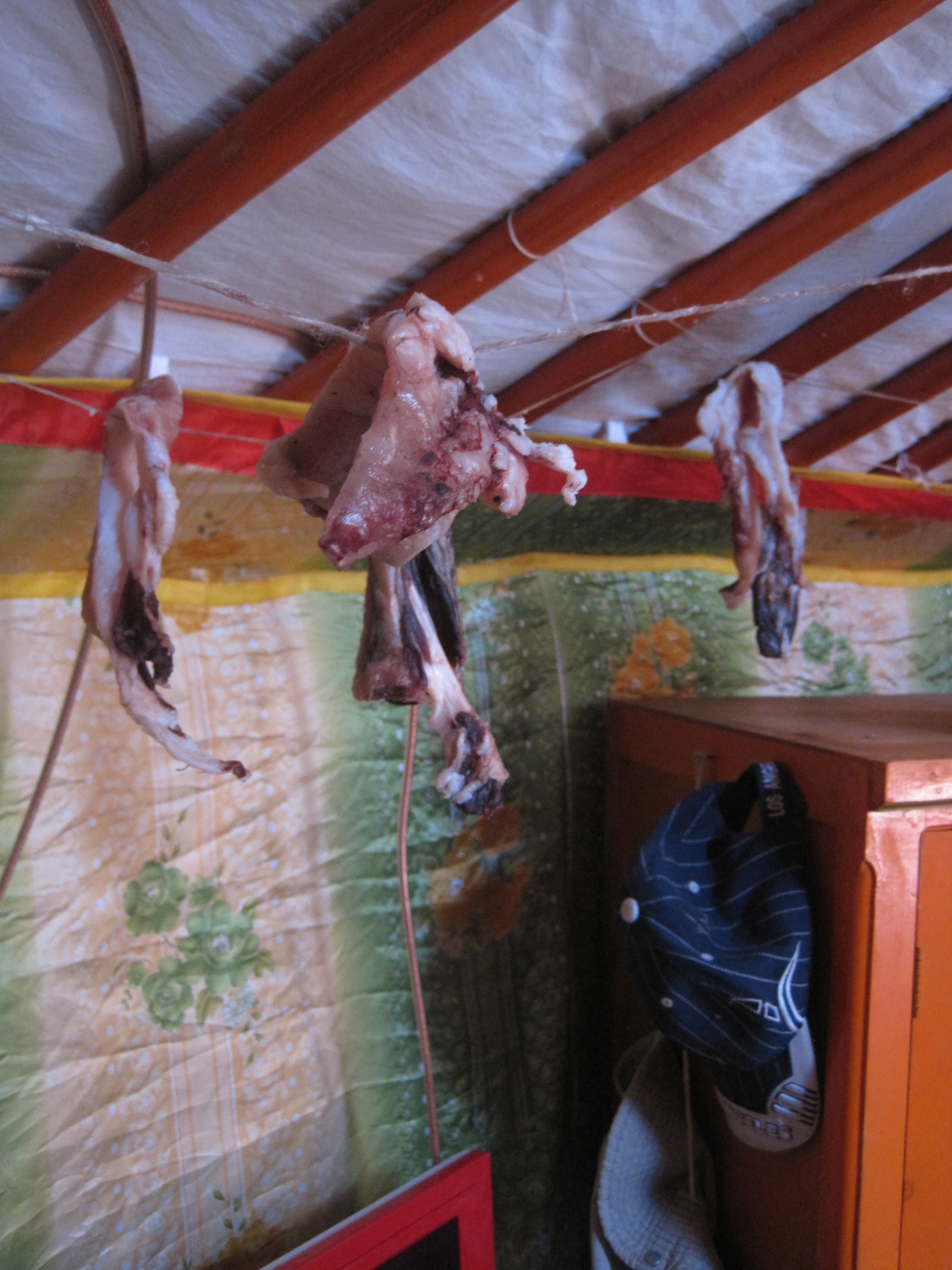
Meat drying in the yurt
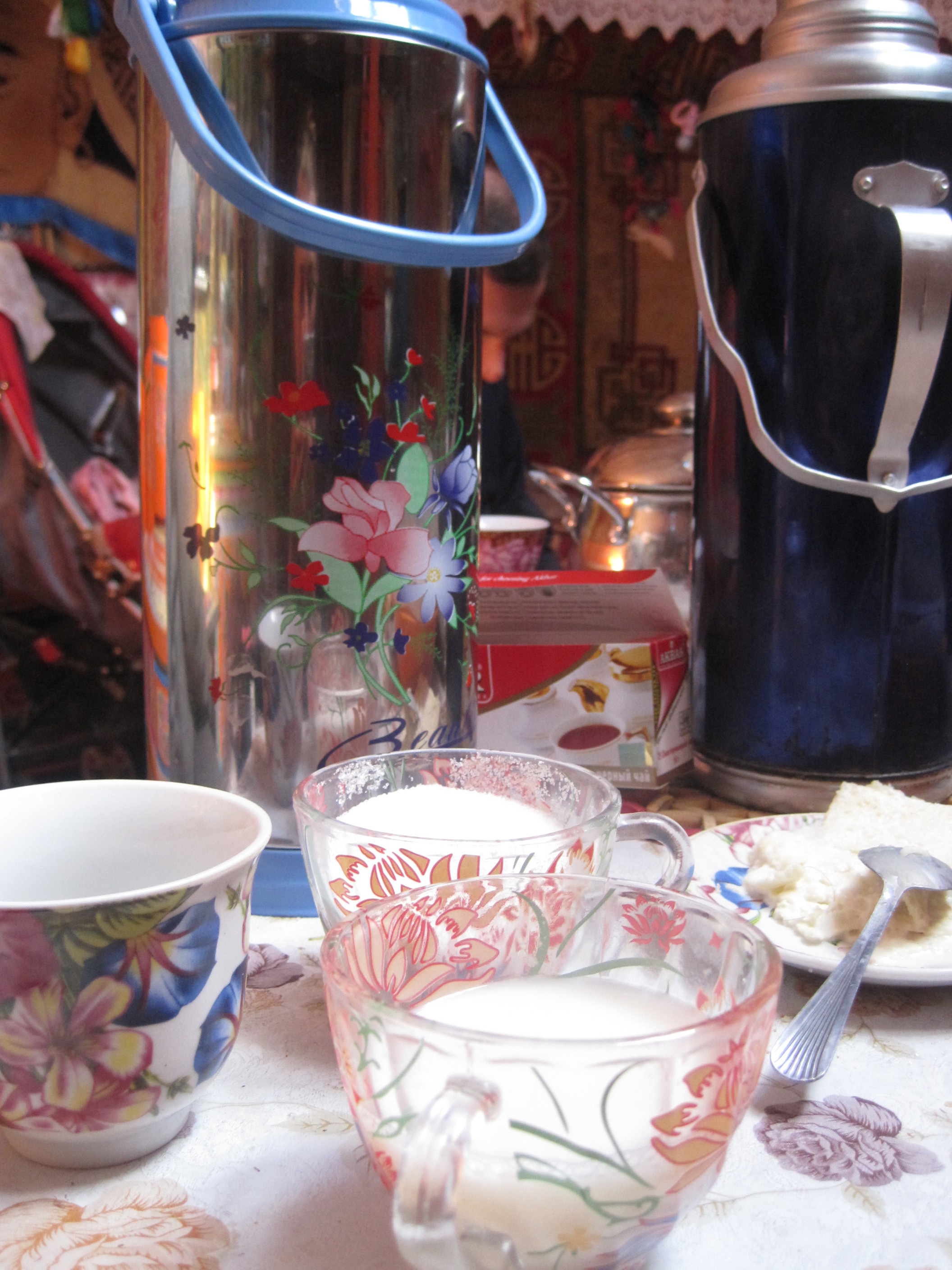
Mmm, milk tea
What a great story and interesting description of life in a yurt. Very good on you.
Awesome, makes me wanna go.
Pingback: The quirky case of Ulaan Baatar, Mongolia « Coco in the World